

Red Light Therapy for Body Support
Part of your body care routine
Many people use red light as part of their body care routine: a few calm minutes for yourself that can help you feel more confident in your routine.
Helps habits stick
A short session can replace late-night scrolling and give your evening a calm, regular rhythm. Small rituals are easier to keep when they feel good.
A relaxing moment in your day
Many people use RLT as a warm, relaxing few minutes in their routine: a relaxing self-care moment that helps them feel comfortable and at ease.
Recovery to train more
When you recover better, you tend to move more and train more consistently. Consistency is what makes any routine stick.


REAL Red Light Therapy
Results, People
Can't Stop Talking About!
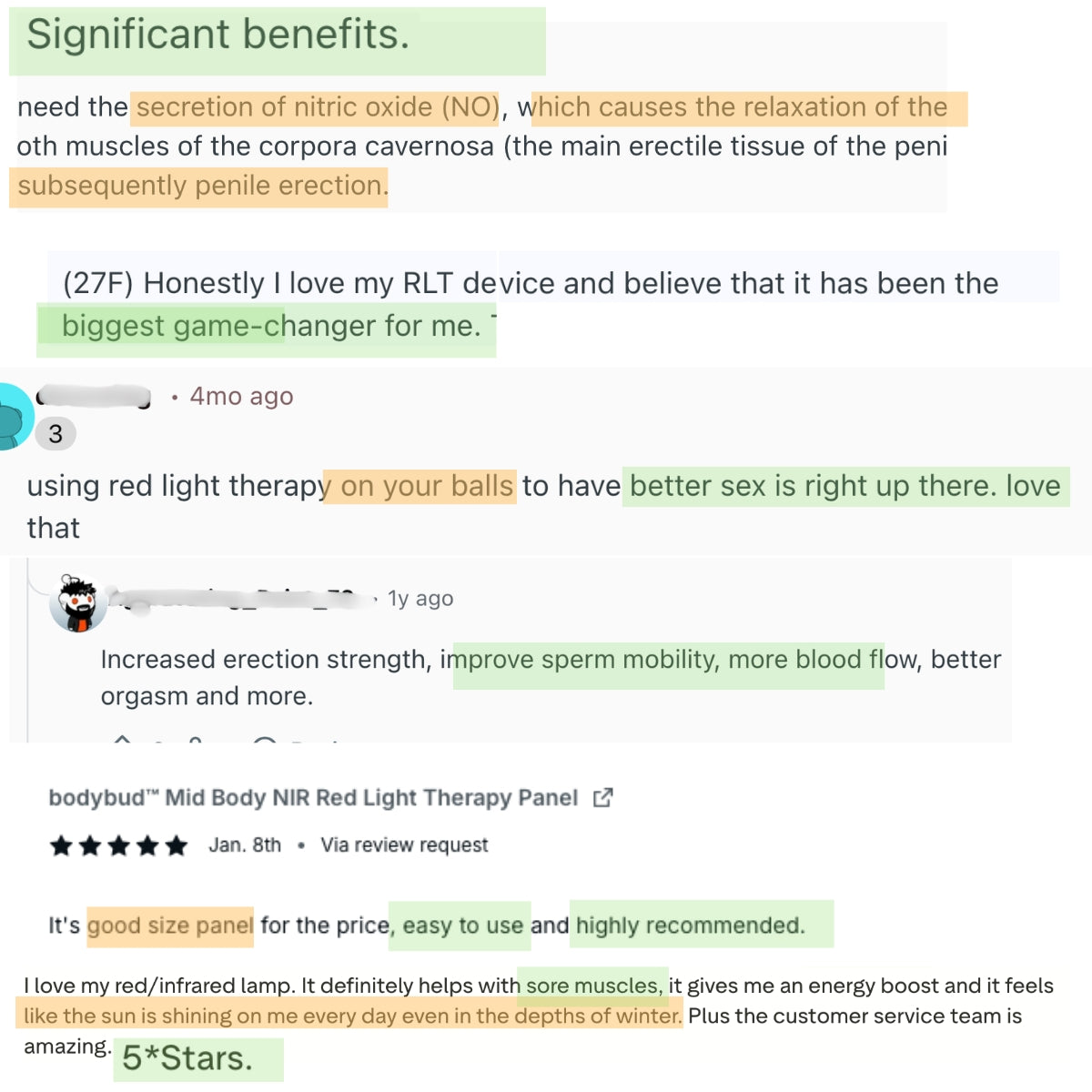
Feel Good, Evening Glow
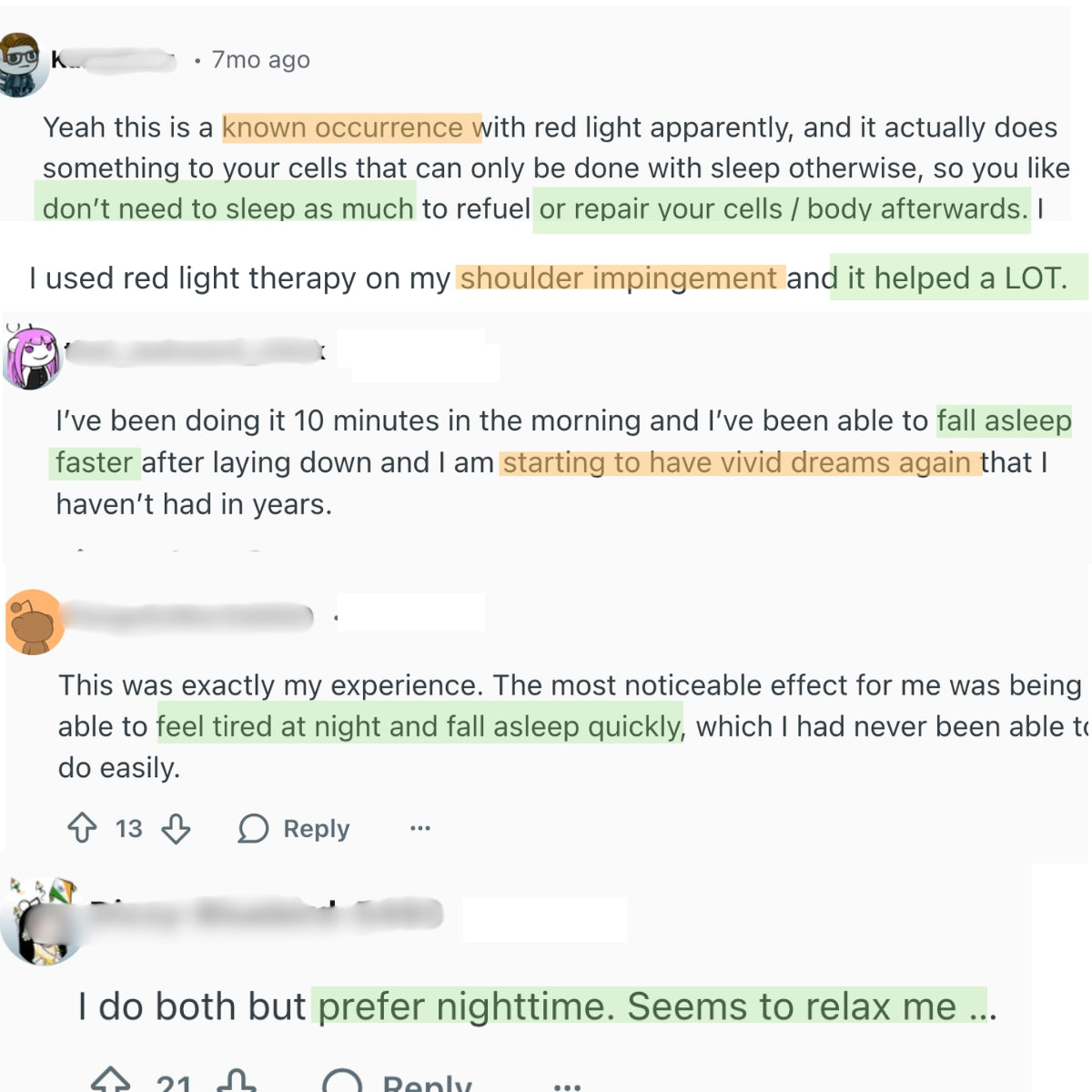
Calm Evening Wind-down
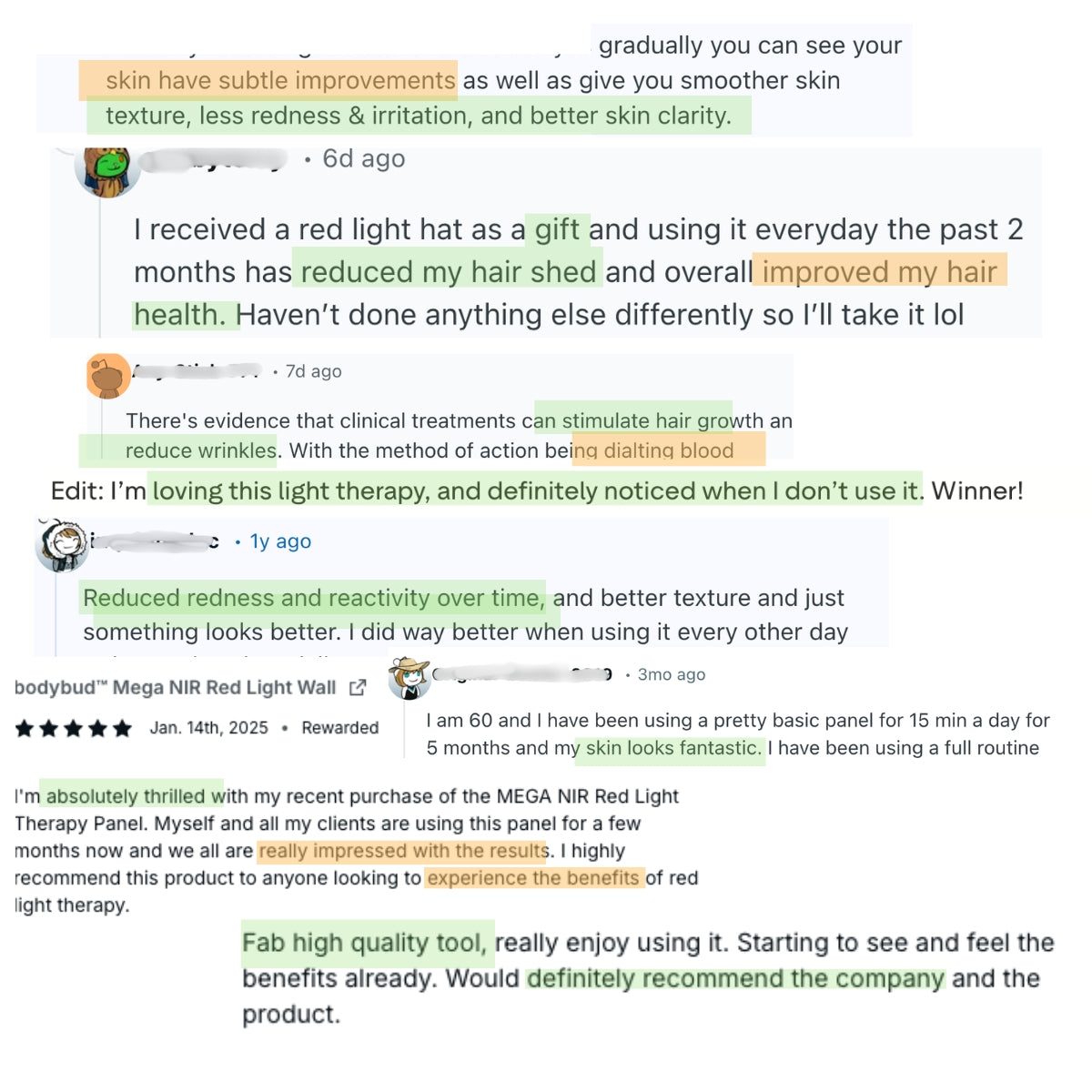
Skin Care Routine, Fresh Glow
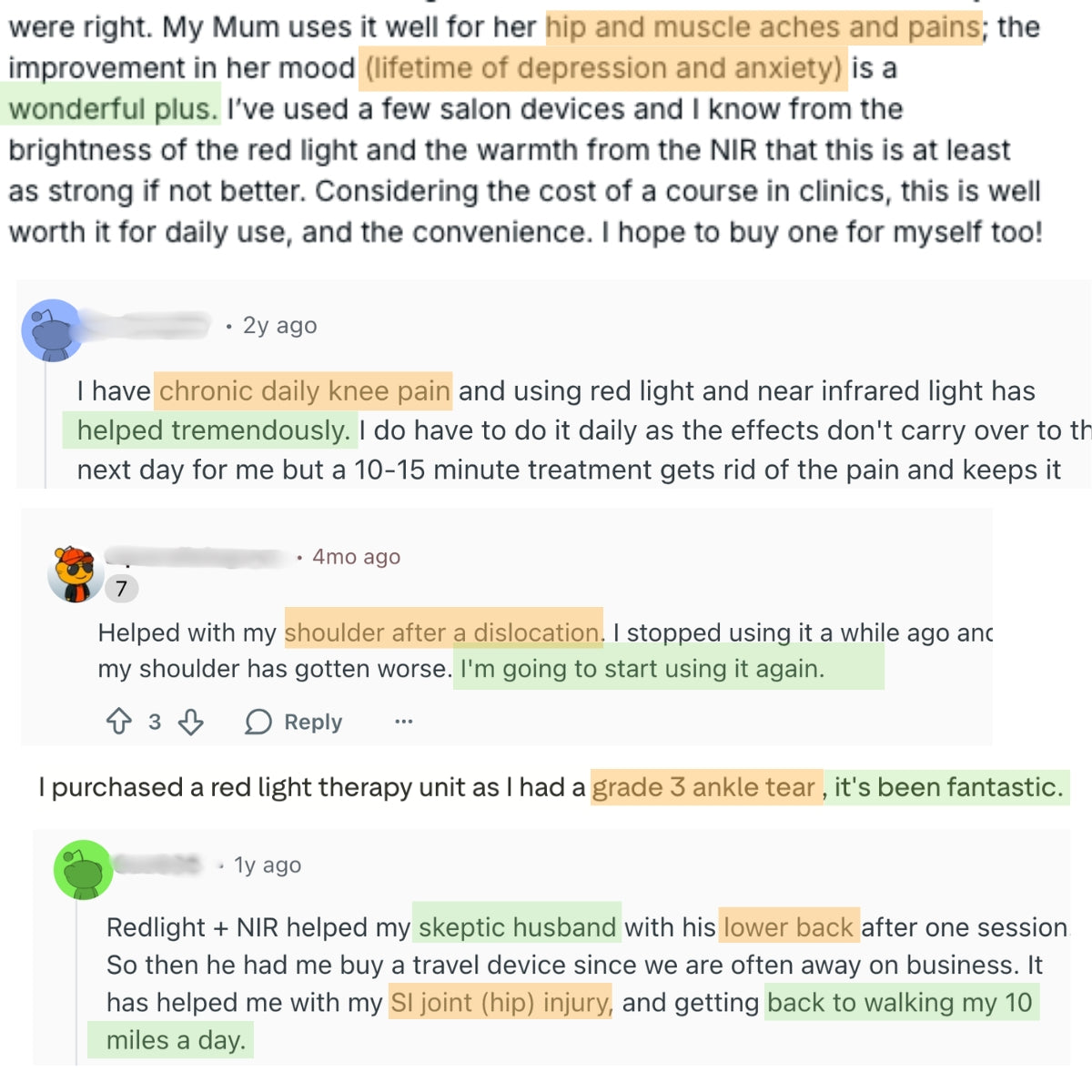
Post-training Comfort, Calm Moments
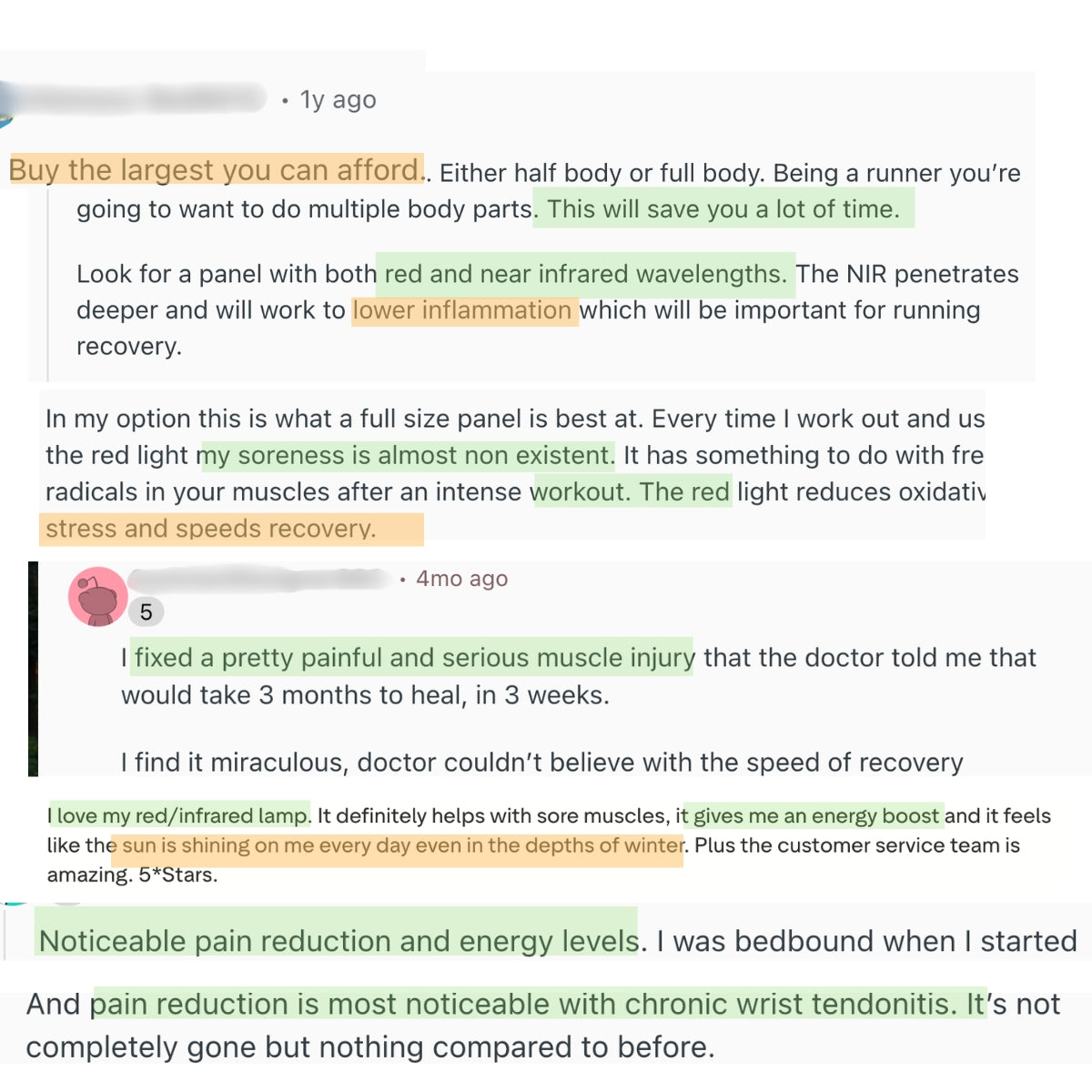
Recovery Routine, Feel Ready
Feel Good, Evening Glow
Calm Evening Wind-down
Skin Care Routine, Fresh Glow
Post-training Comfort, Calm Moments
Recovery Routine, Feel Ready
FAQs
Red light therapy (photobiomodulation) has been looked at in a range of published studies, and a few are listed further down this page as related research.
Here we focus on how people use red light as a relaxing self-care moment and part of their body care routine, alongside everyday habits such as walking, training and good sleep.
Red light therapy (photobiomodulation) uses red and sometimes near-infrared wavelengths. Many people use it as a relaxing self-care moment alongside everyday habits like walking, training and good sleep.
Simple notes work well: how often you use it, how you feel after a session and whether the routine is easy to keep up. Many people find this helps them feel more confident in their routine.
Many people start with 3–5 sessions per week and adjust. Consistency beats occasional long sessions.
Many people find a routine starts to feel natural after a few weeks of regular sessions. Everyone is different, so focus on consistency and on how the sessions feel for you.
Many people choose red + near-infrared for a broader routine (surface + deeper-feel support). The key is a consistent protocol and lifestyle foundations.
Use it as habit-stacking: after a walk or workout, do a short session as a relaxing self-care moment, then hydrate and enjoy a balanced meal.
Related research
A selection of published studies on red and near-infrared light. They are listed for reference only and are not a promise of any particular result. Experiences vary from person to person.
PMID: 20014253 - Non-Invasive Approach for Body Contouring
A randomised, placebo-controlled study of 635 nm low-level laser therapy applied to the waist, hips and thighs. Search the PMID above to read the full paper, including its methods and findings.
PMID: 20393809 - Low-Level Laser Therapy for Body Contouring and Spot Fat Reduction
A study of 635–680 nm low-level laser therapy applied to the waist area, which also explored how light interacts with tissue. Search the PMID above to read the full paper, including its methods and findings.
PMID: 22468172 - Effect of 635nm Low-Level Laser Therapy on Upper Arm Circumference Reduction
A sham-controlled trial of 635 nm low-level laser therapy applied to the upper arms of healthy adults. Search the PMID above to read the full paper, including its methods and findings.
PMID: 29184283 - Does Treadmill Walking with Near-Infrared Light Applied to the Abdominal Area Reduce Local Adiposity
A study that combined treadmill walking with a near-infrared light belt worn on the abdomen. Search the PMID above to read the full paper, including its methods and findings.

How to use red light therapy
A simple guide to positioning, session frequency, and safe day-to-day use.
Start by choosing one area at a time, such as the legs, back, shoulders, or arms. Position the panel at the recommended distance for your device and keep the light facing the body directly where possible. Larger areas may suit a little more distance for wider coverage, while smaller zones can often be used from slightly closer range. Keep sessions simple and repeatable so the routine feels easy to maintain.
- Focus on one area at a time
- Keep the panel facing the treatment area directly
- Use the recommended distance for your device
Most users begin with short, consistent sessions several times per week rather than occasional long sessions. Many devices are used for around 10-20 minutes per area, depending on the model and intended use. Red and near-infrared settings are often used together for broader support. The best results usually come from regular use over time rather than expecting immediate changes.
- Keep sessions short and consistent
- Follow the guidance for your model
- Build usage into a routine you can stick to
Red light therapy is generally well tolerated when used as directed. Always read the instructions for your specific device before use. Avoid overexposure, use any included eye protection where advised, and stop if irritation occurs. The device should be used in line with the manufacturer guidance, especially if you have sensitivity concerns or are using it around the face or eyes.
- Read the device instructions before use
- Use eye protection if needed
- Do not overextend sessions