

Red Light Therapy for Joint Comfort
Support day-to-day comfort
Many people use red + near-infrared light as part of a comfort routine for stiff, overworked areas. The goal is steady support alongside movement, not a quick fix. Small, consistent sessions tend to suit best.

Help recovery after training or work
If soreness builds up from lifting, desk life, or repetitive tasks, RLT can be a practical add-on to your recovery stack. Pair it with light movement, hydration, protein, and quality sleep for best results.

Encourage easier movement
When discomfort makes you move less, things often tighten further. A consistent routine can support a more relaxed body, making it easier to keep up simple mobility, walking, and training habits.
Supports everyday well-being
Used consistently, red light becomes an easy, feel-good habit that supports how you feel day to day.


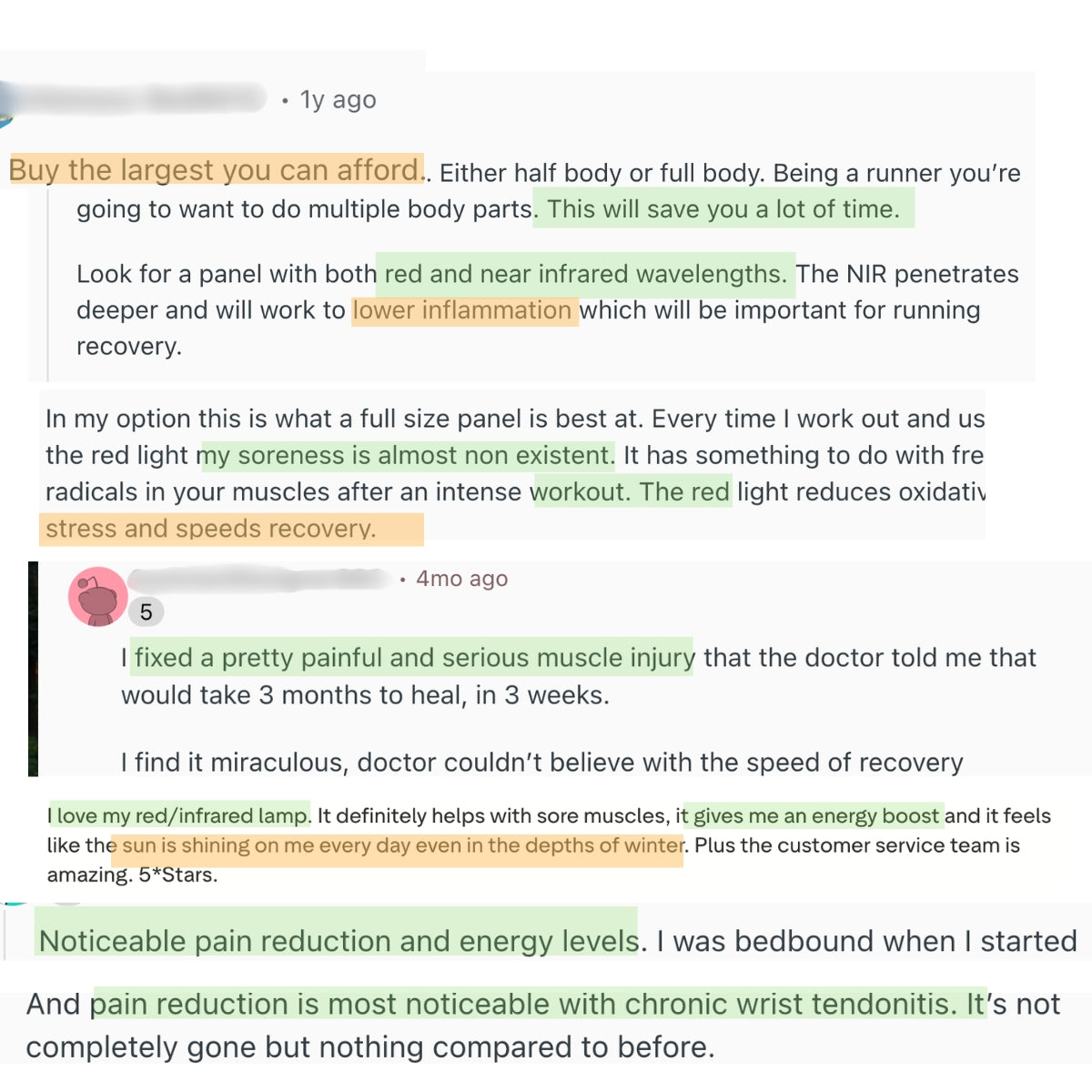
REAL Red Light Therapy Results
People Can't Stop Talking About
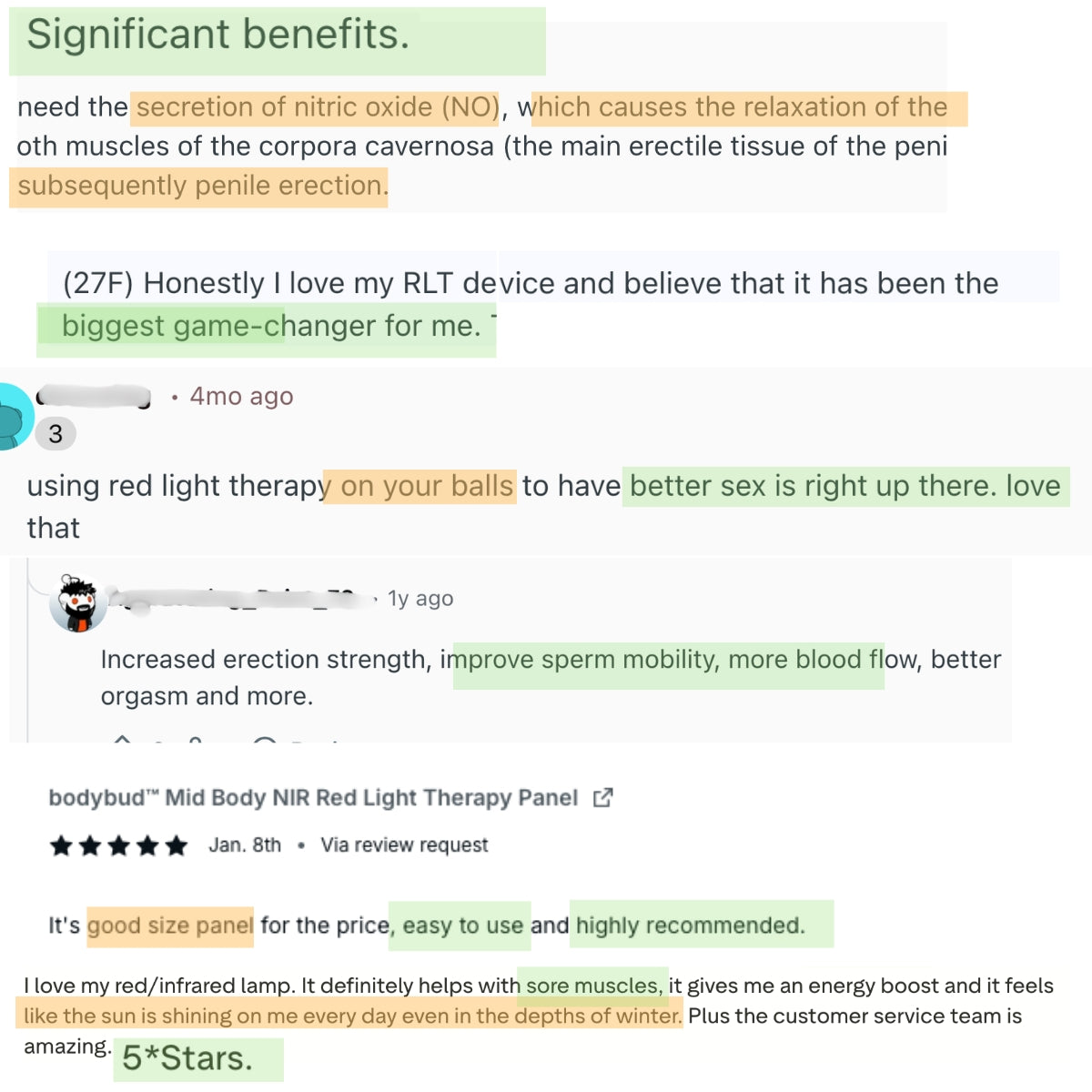
Feel Good, Evening Glow
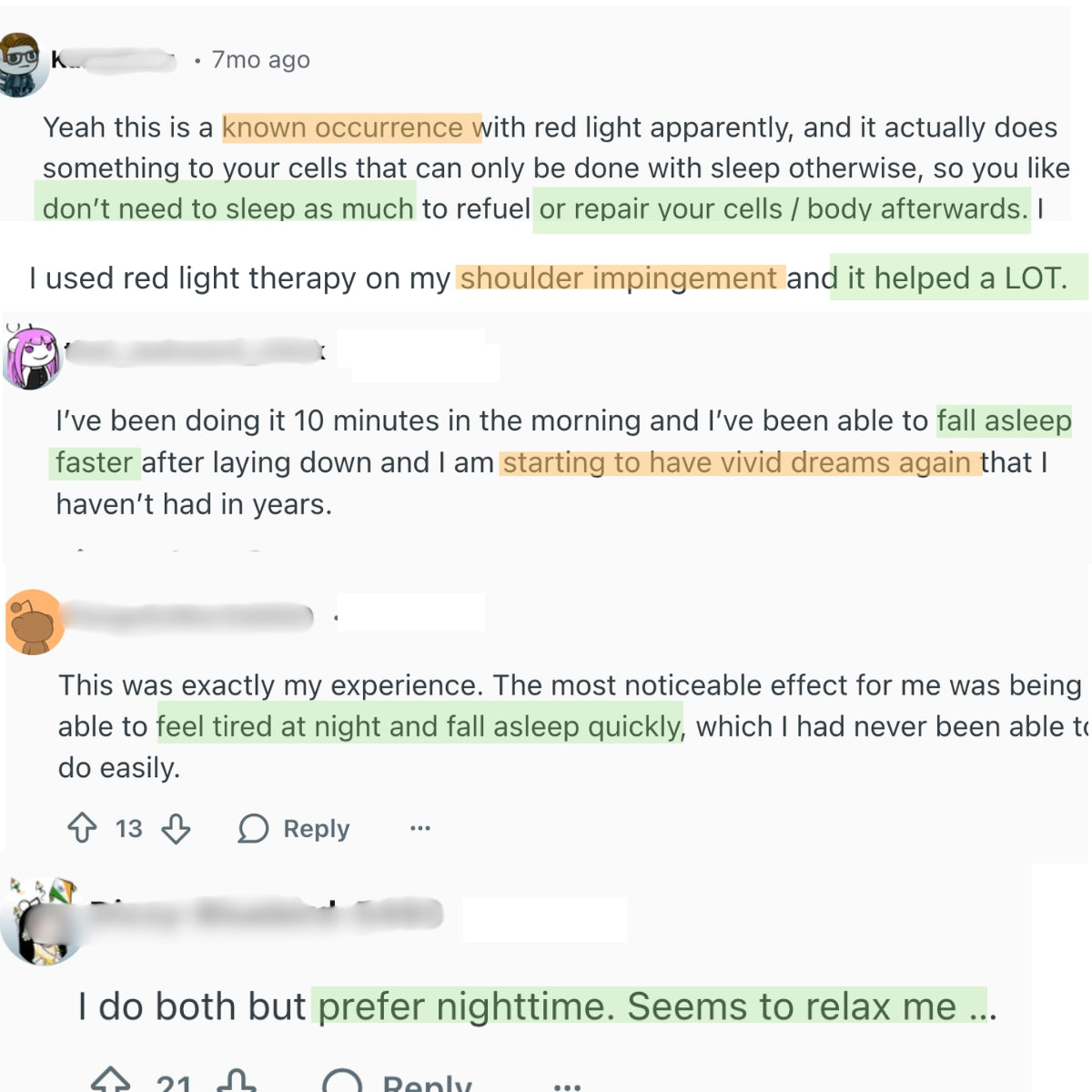
Calm Evening Wind-down
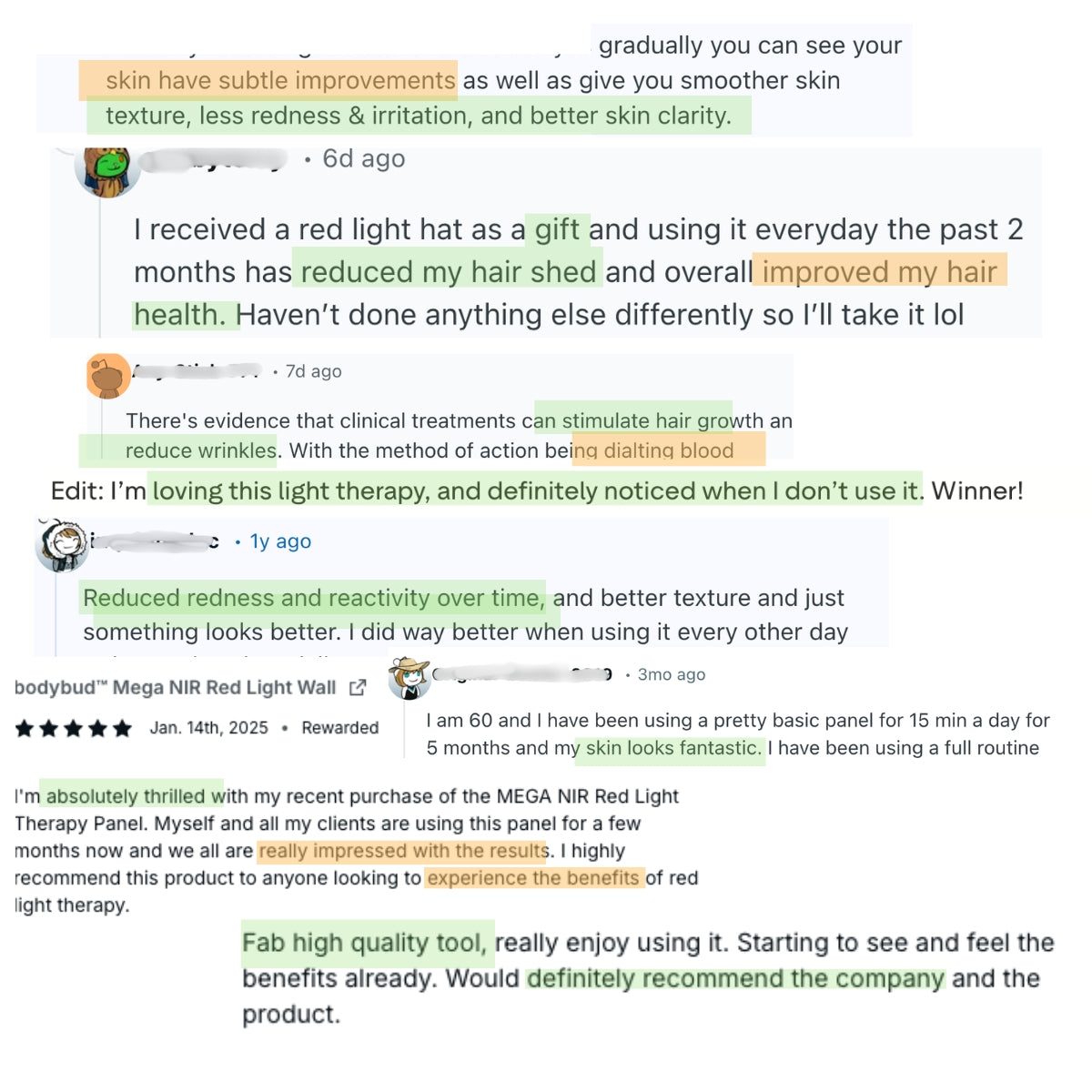
Skin Care Routine, Fresh Glow
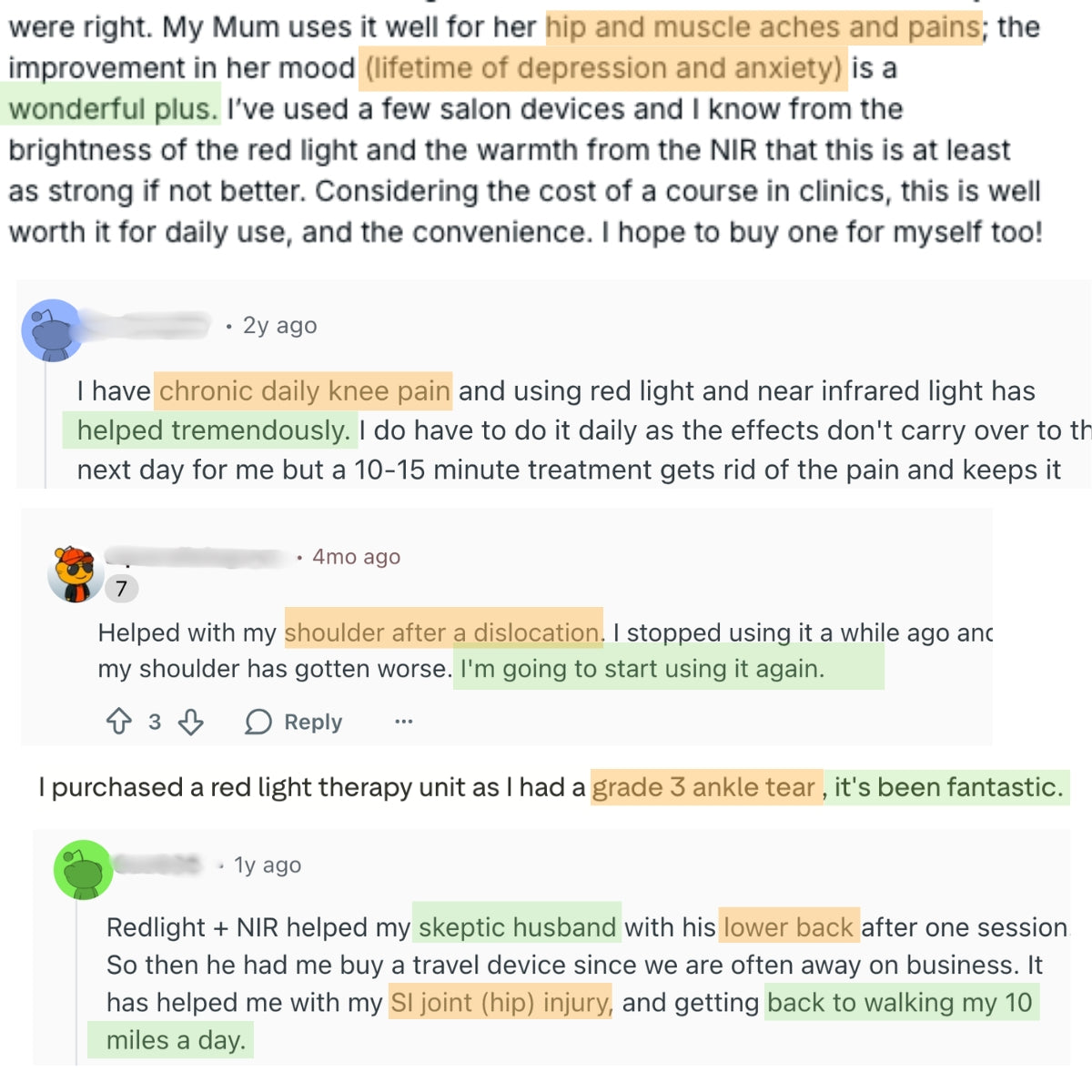
Post-training Comfort, Calm Moments
Recovery Routine, Feel Ready
Feel Good, Evening Glow
Calm Evening Wind-down
Skin Care Routine, Fresh Glow
Post-training Comfort, Calm Moments
Recovery Routine, Feel Ready
Frequently Asked Questions
Answers to common questions about using red light therapy at home as part of an everyday wellness routine.
Many people use red/NIR light as part of a routine to support daily comfort and ease of movement, especially after training or long periods of sitting. It’s typically used alongside normal mobility and strengthening work.
Aim the light at the area around the joint (front/back/sides depending on what feels best). People often rotate angles over different sessions to cover the area evenly.
A common approach is 10–20 minutes per area, adjusting based on how the session feels and the device intensity. If you’re new, start shorter and build up.
Yes — many people pair it with mobility drills, rehab exercises, or strength training. Some like it before training to feel looser, others prefer after to support recovery.
Generally, red light is not the same as heating devices, but if you have implants or a medical condition, it’s best to check with a clinician for personalised guidance.
Not exactly. Some devices feel mildly warm, but the goal isn’t “heat therapy”. It’s typically used as a light-based wellness tool, not a replacement for clinical care.
Red light therapy uses specific red and near-infrared wavelengths of light from LED panels. It is a non-invasive, UV-free wellness routine you can do at home.
Linked studies
A selection of published red and near-infrared light research, listed for reference. Study findings relate to the specific devices, settings and groups tested, and do not mean bodybud products diagnose, treat, cure or prevent any condition.
PMID: 1727843 — Knee Osteoarthritis Pain and Disability Trial
Published study listed for reference only. Search the reference above (PMID or DOI) to read the full paper. Findings apply to the devices, settings and groups used in the study and are not claims about bodybud products, which are wellness devices not intended to diagnose, treat, cure or prevent any disease.
PMID: 18341417 — Frozen Shoulder Pain and Function Trial
Published study listed for reference only. Search the reference above (PMID or DOI) to read the full paper. Findings apply to the devices, settings and groups used in the study and are not claims about bodybud products, which are wellness devices not intended to diagnose, treat, cure or prevent any disease.
PMID: 24733283 — Knee Osteoarthritis Symptom Improvement Study
Published study listed for reference only. Search the reference above (PMID or DOI) to read the full paper. Findings apply to the devices, settings and groups used in the study and are not claims about bodybud products, which are wellness devices not intended to diagnose, treat, cure or prevent any disease.
PMID: 19530911 — 830 nm Knee Osteoarthritis Study
Published study listed for reference only. Search the reference above (PMID or DOI) to read the full paper. Findings apply to the devices, settings and groups used in the study and are not claims about bodybud products, which are wellness devices not intended to diagnose, treat, cure or prevent any disease.
PMID: 31662383 — Knee Osteoarthritis Meta-analysis
Published study listed for reference only. Search the reference above (PMID or DOI) to read the full paper. Findings apply to the devices, settings and groups used in the study and are not claims about bodybud products, which are wellness devices not intended to diagnose, treat, cure or prevent any disease.
How to use red light therapy
A simple guide to positioning, session frequency, and safe day-to-day use.
Start by choosing one area at a time, such as the legs, back, shoulders, or arms. Position the panel at the recommended distance for your device and keep the light facing the body directly where possible. Larger areas may suit a little more distance for wider coverage, while smaller zones can often be used from slightly closer range. Keep sessions simple and repeatable so the routine feels easy to maintain.
- Focus on one area at a time
- Keep the panel facing the treatment area directly
- Use the recommended distance for your device
Most users begin with short, consistent sessions several times per week rather than occasional long sessions. Many devices are used for around 10 minutes per area, depending on the model and intended use. Red and near-infrared settings are often used together for broader support. The best results usually come from regular use over time rather than expecting immediate changes after one or two sessions.
- Keep sessions short and consistent
- Follow the guidance for your model
- Build usage into a routine you can stick to
Red light therapy is generally well tolerated when used as directed. Always read the instructions for your specific device before use. Avoid overexposure, use any included eye protection where advised, and stop if irritation occurs. The device should be used in line with the manufacturer guidance, especially if you have sensitivity concerns or are using it around the face or eyes.
- Read the device instructions before use
- Use eye protection if recommended
- Do not overcomplicate or overextend sessions