


Most of us don't need another gadget. What we're usually short of is ten quiet minutes in the day that belong to us. That's where a lot of people find red light therapy fits in: a fixed, screen-free slot in the morning or evening, standing or sitting in front of a panel, doing nothing else.
This guide explains what red light therapy actually is, what the numbers on a panel mean, and how to build it into a routine you'll keep. We don't make health claims about it, and neither should anyone selling you one. What we can do is help you understand the hardware properly so you can choose well.

What Is Red Light Therapy?
Red light therapy, also called photobiomodulation or PBM, means sitting in front of a panel of LEDs that give off visible red light and invisible near-infrared (NIR) light at specific wavelengths. Sessions are short, usually around 10 minutes, and the light is low-heat, so it feels gently warm rather than hot.
Research into light at these wavelengths began in the late 1960s, soon after the laser was invented, and for decades it was done almost entirely with lasers in clinical settings. The shift to LEDs is what made home use possible. LED panels are simpler to use, can cover a large area at once and cost a fraction of the price. That's why wall-mounted and door-hung panels are now common in homes, gyms and studios.
How to Read a Red Light Panel
A panel's spec sheet can look like a wall of numbers. These are the four that matter when you compare them:
1. Wavelengths
Measured in nanometres (nm). Red light usually sits at 630nm and 660nm and is visible as a deep red glow. Near-infrared sits at around 810nm, 830nm and 850nm and is invisible to the eye. Most quality panels combine several red and NIR wavelengths, and a good one lets you choose between them.
2. Irradiance
This is the light output reaching you at a given distance, measured in mW/cm². It's the fairest way to compare two panels, but only if both figures are measured at the same distance. A reputable seller will tell you the distance.
3. Flicker and EMF
Cheaper drivers can make LEDs flicker at a rate you don't consciously notice but may find uncomfortable over a session. Flicker-free drivers and low EMF output make for a calmer, more comfortable ten minutes.
4. Coverage
A small panel suits the face or one area. A larger panel, or several linked together, covers more of the body in one session, so you don't have to turn around and repeat.

How People Use It at Home
The people who get the most out of a panel treat it as a habit rather than a quick fix. These are the routines we hear about most:
The morning slot
Ten minutes before the day starts, often alongside a coffee or a stretch. It's a way of starting the day on purpose rather than on your phone.
The evening wind-down
Lights low, phone in another room, ten minutes in front of the panel. For many people it has become the signal that the working day is over.
After training
A lot of our customers who train regularly build a session into their post-workout routine, next to stretching and foam rolling.
Part of a skincare routine
Some people use red light alongside their usual skincare as part of a regular self-care ritual.
A shared household panel
One door-mounted panel can serve the whole house. Everyone takes their own ten minutes.
Consistency beats intensity. Follow the session times in your device manual, always wear the supplied goggles, and don't be tempted to go longer or closer than the instructions say.

bodybud™ Mega NIR Red Light Therapy Panel
A full-body panel that covers you from your knees to your chest in one session. It has five selectable wavelengths (red at 630nm and 660nm, near-infrared at 810nm, 830nm and 850nm), flicker-free LEDs and low EMF output, so your ten minutes are comfortable and free of distraction.
Key Features:
- Superior 3W LEDs that outperform many higher-wattage dual LEDs.
- Energy-efficient LEDs with high irradiance.
- Advanced cooling technology for comfortable use.
- Adjustable touchpad for timer and wavelength selection.
- High-quality acrylic lens for increased light transmittance.
What's Included:
- bodybud™ Mega Body Near-Infrared Red Light Therapy Panel.
- Door Hanging Hook.
- Adjustable Pulley Plate System.
- Protective Goggles.
- Remote Control.
- Gloss Paper Manual.
- All Custom and Import Charges (if applicable).
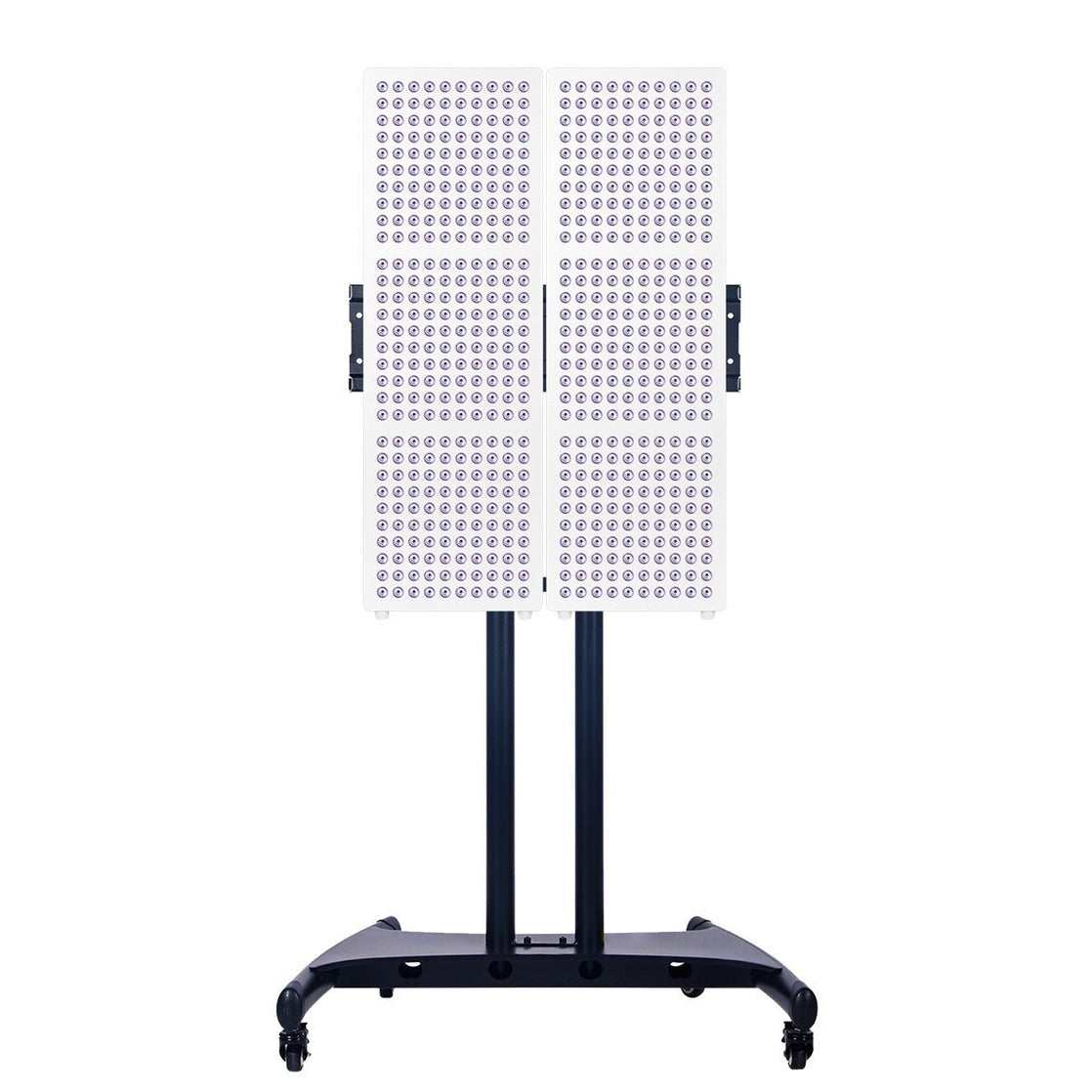
bodybud™ Mega NIR Red Light Wall
If one panel isn't enough coverage, the Mega NIR Red Light Wall links two or four panels together, so you can do a head-to-toe session in one go. It has the same flicker-free LEDs and low EMF output as the single panel. If you're buying several units, add the adjustable stand for seated, standing or lying-down sessions.
Key Features
- Superior 3W LEDs That Outperform Many Higher-Wattage Dual LEDs
- Energy-Efficient LEDs With High Irradiance
- Advanced Cooling Technology for Comfortable Use
- Adjustable Touch Pad for Timer & Wavelength Selection
- Sturdy Door-Mount Design for Convenience & Space Saving
- Optional Stand for Seated, Standing or Lay-Down Sessions
- High-Quality Acrylic Lens for Increased Light Transmittance
- Increased Whole Body Coverage
What's Included
- bodybud™ Full Body Near-Infrared Red Light Therapy Panels
- Door Hanging Hook
- Adjustable Pulley Plate System
- Protective Goggles
- Remote Control
- Gloss Paper Manual
- All Custom and Import Charges (if applicable)
Go big with the best-value Red Light Wall System from bodybud™.
Conclusion
Red light therapy isn't magic, and anyone who tells you it is is selling harder than they should. What it offers is simple: a well-made piece of hardware and a reason to give yourself ten deliberate minutes, day after day. If that sounds like something you'd keep up, browse our Red Light Therapy collection. If you're unsure which size suits your space, get in touch and we'll talk you through it.
Disclaimer
bodybud™ devices are wellness products, not medical devices. They are not intended to diagnose, treat, cure or prevent any disease or medical condition. This article is for general information only and is not medical advice. If you are pregnant, taking photosensitising medication, or managing a health condition, speak to your GP before use. Always follow the device instructions and wear the supplied eye protection.